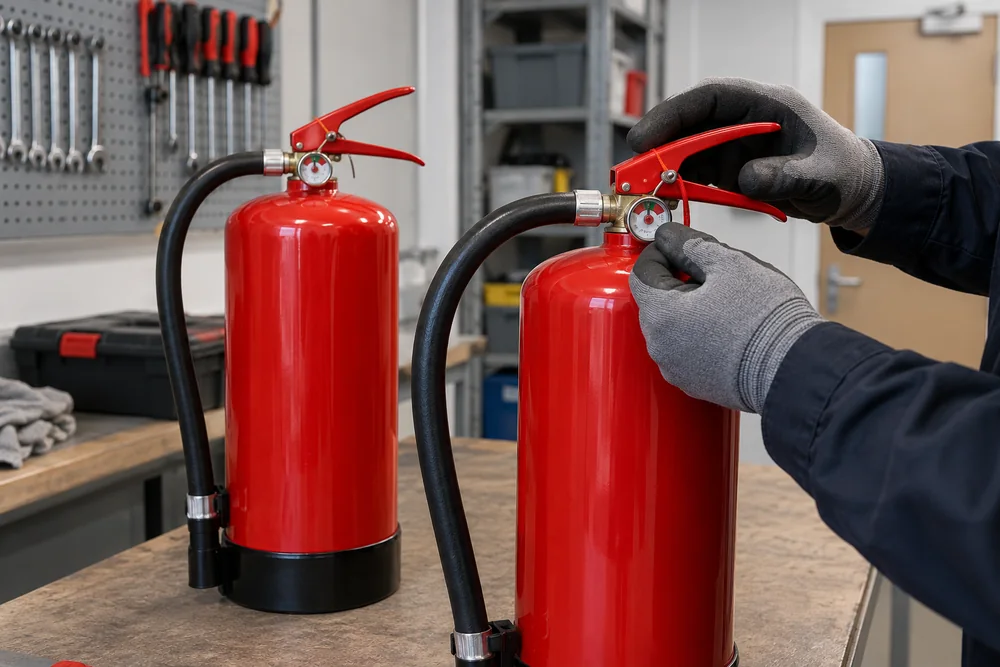
Service The Equipment You Depend On
Fire extinguisher servicing helps establish whether the portable equipment at your business remains suitable and serviceable. It also gives you a chance to check that the equipment still matches the hazards present. We help offices, schools, workshops, retail premises and other commercial sites define a servicing visit with an equipment schedule and written findings.
A building can change while its extinguishers stay in the same places. A new cooking activity, altered storage arrangement or moved electrical equipment can affect selection and positioning. Tell us about changes since the previous visit so the enquiry covers more than simply updating labels on the existing units.
What Is Checked During Servicing
The work should follow the appropriate procedures for each extinguisher type, condition and service history. A basic service typically considers signs of damage, corrosion, leakage, tampering and the condition of components. Pressure indications, operating instructions and the location of equipment also need attention where relevant to the particular unit.
The engineer should identify equipment that needs further work, replacement or a different level of service. Not every extinguisher has the same servicing requirements, and an unreadable or missing record may need investigation. A useful report distinguishes work carried out from recommendations that still need your approval.
Relevant Standards And Scottish Law
For portable extinguishers at Edinburgh premises, BS 5306-3 sets out commissioning and maintenance recommendations. BS 5306-8 covers their selection and positioning. These standards support decisions about equipment, but the fire risk assessment and the actual hazards at your premises remain important to the overall provision.
The Fire (Scotland) Act 2005 and Fire Safety (Scotland) Regulations 2006 provide the relevant legal framework for Edinburgh business premises. Suitable firefighting equipment and arrangements should form part of your fire safety measures where required. Staff also need appropriate instruction, and equipment should never encourage someone to take a risk instead of using a safe escape route.
How The Servicing Visit Works
Begin with an approximate equipment count, a description of the premises and the most recent service record. Identify locked rooms, tenant areas and any permit requirements. For several buildings, a simple location schedule helps the engineer find the equipment and record anything that was inaccessible during the visit.
At the premises, equipment is checked within the agreed scope and the service record is updated. Units needing extra attention are identified, with the reason for the recommendation. Agree what authority the engineer has for replacement or recharge work so there are no assumptions about spending beyond the quoted visit.
Afterwards, keep the equipment register and service report available for the person managing fire safety. Arrange action on missing, condemned or unsuitable equipment and record what was done. Routine visual checks between visits remain useful for identifying equipment that has been moved, used, obstructed or damaged.
Choosing Equipment For The Hazard
Extinguisher choice depends on the materials and processes present, the environment and the training of the people expected to use it. Offices, commercial kitchens and workshops can require different equipment. A specialist should consider the hazard and the potential consequences of using an unsuitable extinguishing medium.
Changes to products and environmental requirements can also affect replacement decisions. Ask for the reason behind any proposed change of extinguisher type, rather than treating a like-for-like replacement as automatic. Include safe removal and disposal of replaced equipment in the agreed scope, and retain any relevant disposal information supplied.
Cost, Access And Ongoing Checks
The number and type of extinguishers, their service history and the amount of further work required all affect the quotation. Extended servicing, recharging, replacement units and difficult access can alter the total. A proposal should make clear which activities are included in the routine visit and which require separate agreement.
Nominate someone to keep locations accessible and check for obvious defects between specialist visits. A serviced extinguisher can become unavailable if stock is stacked around it or it is moved behind a locked door. Link those checks to your premises management routine and report any used extinguisher for attention rather than putting it back into service.