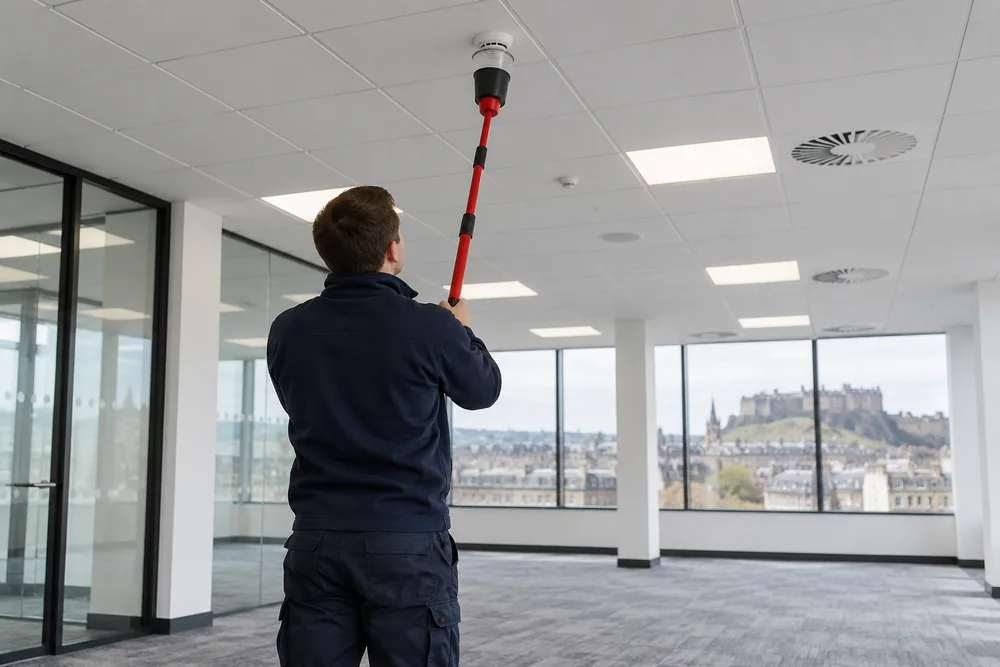
Keeping The Warning System In Use
Fire alarm maintenance is a combination of routine user checks, specialist servicing and prompt attention to faults. A panel showing normal does not prove that every detector, sounder and interface will work as intended. We help facilities managers and commercial dutyholders establish the scope for maintaining the system they actually have.
Start with the panel make and model, the extent of coverage and the latest service report. If you have recently taken over a building, ask for its drawings, certificates and logbook. Missing records, repeated unwanted alarms and isolated devices are all useful information when deciding what a first visit needs to include.
What A Service Visit Should Cover
An agreed service programme should address the installed system, its condition and the relevant manufacturer instructions. Typical work includes reviewing the logbook, checking the control equipment and power supplies, testing devices within the scheduled scope and examining fault or unwanted-alarm history. The engineer should record defects and any parts of the system that could not be tested.
Interfaces require attention as well as individual detectors. Door release arrangements, remote signalling and building plant controls may need coordination with other contractors. Define who is responsible for those functions so an important connection is not assumed to belong to someone else's maintenance contract.
The Standard And Your Duties
BS 5839-1:2025 covers maintenance as well as the design and installation of commercial fire alarm systems. The appropriate programme considers the system, occupancy, environmental conditions and risk. Routine staff testing and periodic servicing have different purposes, and one does not replace the other.
Scottish fire safety law requires suitable fire safety measures to be maintained where necessary to safeguard people. In Edinburgh, the framework is the Fire (Scotland) Act 2005 and Fire Safety (Scotland) Regulations 2006. Keep maintenance evidence with your other fire safety records and use significant defects to inform the fire risk assessment.
How A Maintenance Arrangement Starts
Provide the existing system details and describe any known issues. Agree the equipment and buildings included, the servicing schedule, access arrangements and how defects will be reported. Where information is incomplete, an initial inspection may be needed before a routine maintenance scope can be priced sensibly.
Before testing starts, relevant staff and any alarm receiving centre need to know what is happening. Isolation and reinstatement arrangements must be controlled so a test does not create an avoidable emergency response or leave a protection function disabled. The building dutyholder should understand any temporary precautions required during the work.
After the visit, review the written findings and arrange action on defects. Distinguish recommended improvements from repairs needed to restore a failed function. Store the service record, update your logbook and track open issues until the remedial work has been completed and the affected operation checked.
Faults, Unwanted Alarms And Changes
Repeated unwanted alarms should be investigated rather than accepted as part of normal operation. Record where and when they happen, the activity taking place and the device involved. Dust from works, changes in room use or unsuitable detection can be relevant, but a proper investigation should establish the cause before recommending alterations.
A refurbishment can make an existing maintenance plan out of date. New partitions, access-controlled doors and changed escape routes may require design review alongside servicing. Tell the maintenance contractor about planned changes, and do not treat a routine service certificate as approval of every later alteration to the building.
Understanding The Quotation
Maintenance costs reflect system size, device numbers, travel within the agreed service area, access restrictions and the scope of testing. Specialist systems, high ceilings and third-party interfaces can require extra time or coordination. The condition of an inherited installation can also affect the work needed before routine servicing begins.
Check whether replacement batteries, consumables, call-outs, repairs and out-of-hours attendance are included. Agree how additional work will be authorised and priced. A clear equipment schedule and written exclusions help you budget accurately without assuming that every future fault is covered by a planned service arrangement.